New Rural Employment Act Guarantees 125 Days of Work, Records 31.69 Crore Person-Days
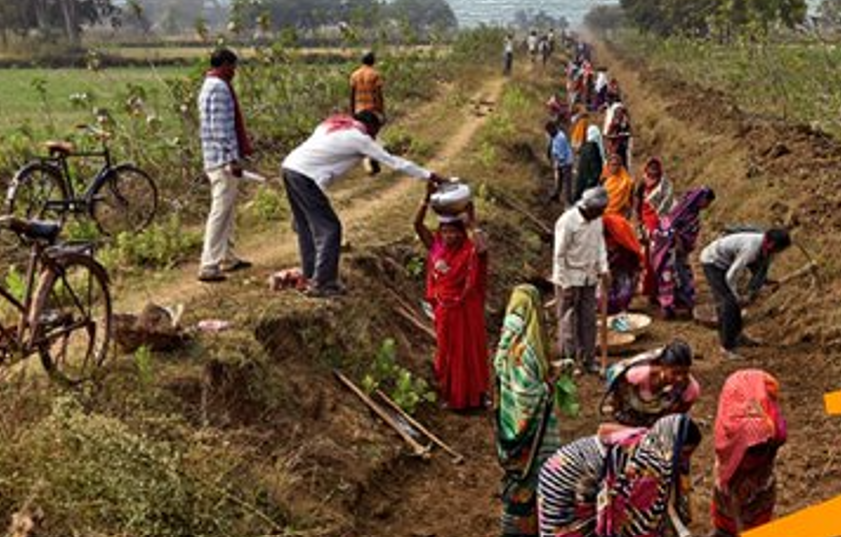
New Delhi: The Viksit Bharat–Guarantee for Rozgar and Ajeevika Mission (Gramin), or VB-G RAM G, has generated more than 31.69 crore person-days of employment since its implementation on July 1, 2026, according to the Ministry of Rural Development.
The VB-G RAM G Act, 2025, provides a statutory guarantee of 125 days of wage employment per financial year to every rural household whose adult members volunteer for unskilled manual work. The framework is aligned with the vision of Viksit Bharat @2047 and has been rolled out across rural areas of the country, replacing Mahatma Gandhi NREGA.
As of September 24, 2026, the programme had 10.88 crore active workers in 2026-27, with employment provided on demand to more than 2.81 crore workers belonging to around 2.23 crore rural households. Women accounted for 61.65% of participation. The government had issued 15.17 crore Gramin Rozgar Guarantee Cards, while 2.83 lakh assets had been created.
The programme focuses on four key areas: water security, core rural infrastructure, livelihood-related infrastructure and mitigation of extreme weather events. It seeks to combine employment generation with durable asset creation and integrated village development.
A key feature is the preparation of Viksit Gram Panchayat Plans (VGPPs) through participatory, bottom-up planning. Gram Panchayats identify local needs, map existing assets and infrastructure gaps, and prioritise works with the participation and approval of the Gram Sabha.
The planning process uses GIS, Yuktdhara, PM Gati Shakti and other digital tools to map assets, identify development gaps and prevent duplication. The framework lists 318 types of permissible works across the four thematic areas. Plans are consolidated at block, district, state and national levels to contribute to the Viksit Bharat National Rural Infrastructure Stack.
The programme had 97.17 lakh works under execution, with 73.24 lakh approved works available to meet future employment demand. Nearly 2.31 lakh Gram Panchayats were executing works, while around 20.16 lakh worksites were operational. Digital Benefit Transfer recorded 3.76 crore transactions in 2026-27.
For 2026-27, the Centre has allocated ₹93,841 crore to states and Union Territories as interim allocation, with a first instalment of ₹25,880 crore issued as a mother sanction.
Digital systems, including e-KYC, face and biometric authentication, geo-tagging, electronic measurement books and mobile-based monitoring, are intended to strengthen transparency and accountability. Real-time dashboards and AI-enabled analytics also support oversight and corrective action.
The framework aims to bring employment, technology and coordinated public investment together to strengthen rural livelihoods and build resilient village infrastructure.